Acropolis Integrity & Intelligence Lab Advanced Tools & Techniques for EU-Funded Projects – Project Selection • Management Verification • On-the-Spot Checks • Audits • Payment Controls • Fraud, Corruption & Money-Laundering Investigations

A Unique Three-Day Workshop in Athens

During this intensive three-day workshop, participants will discover how innovative Integrity & Intelligence Tools and Techniques can support project selection, management verifications, audits, payment controls and investigations into fraud, corruption and money laundering regarding EU funded projects. .(bring your laptop)

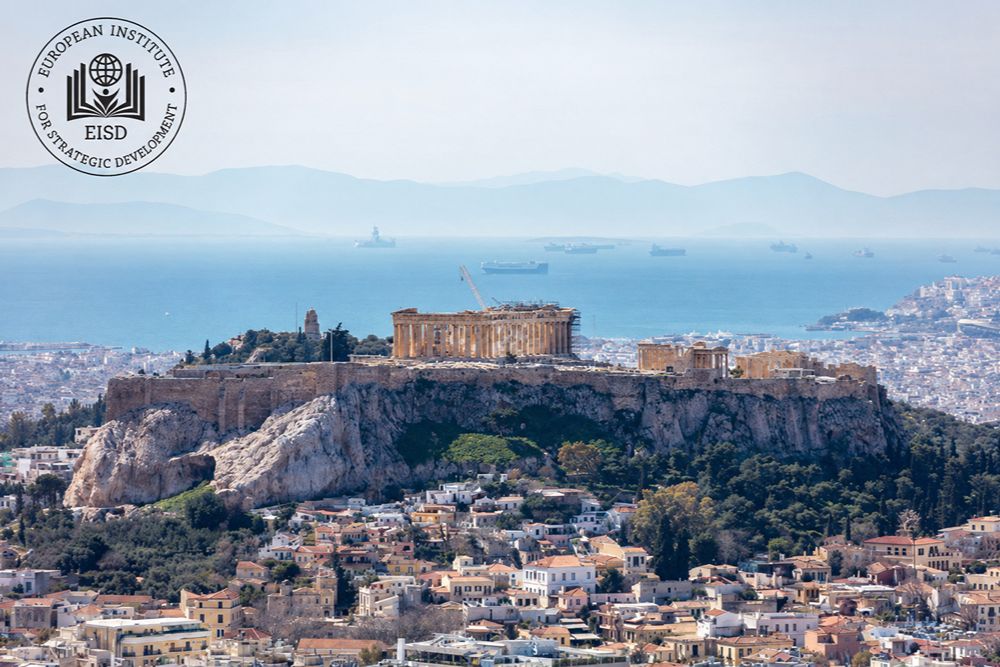
The historic Acropolis provides an inspiring setting for a highly practical combination of risk analysis, AI and Hybrid Co-Intelligence, OSINT, geospatial intelligence, Graph Intelligence, Satellite Imagery, visual intelligence and professional on-site observation and Chain of Doubt techniques.

During the unique “Restoring the Acropolis Monuments” Field Research Challenge, participants will explore the Acropolis in multidisciplinary teams, compare publicly available project information with the visible physical reality, identify potential risk indicators, document observations and analyse changes, accessibility features and restoration activities.

They will learn to distinguish facts from assumptions, test alternative explanations and determine which additional documents and evidence would be required to support reliable verification, audit and anti-fraud conclusions.


WHO SHOULD ATTEND?

Our seminars are designed for public-sector professionals, EU Funds experts and other stakeholders involved in the planning, programming, implementation, management, monitoring, verification, audit and control of EU-funded programmes and projects, including:

  • Managing Authorities and Intermediate Bodies
  • Certifying and Audit Authorities
  • Ministries and Central Government Authorities
  • Regional and Local Governments
  • EU Funds Programme and Project Managers
  • EU Funds Beneficiaries and Implementing Bodies
  • Financial Management, Control and Verification Officers
  • Auditors, Internal Auditors and Compliance Professionals
  • Anti-Fraud, Anti-Corruption and Anti-Money-Laundering Professionals
  • National, Promotional and Investment Banks
  • Regional Development Agencies and Public Investment Bodies
  • Policy Makers and Senior Decision-Makers
  • Public Procurement and Financial Management Professionals
  • Consultants and Professional Advisers working with EU Funds
  • International, national and local associations and networks
  • NGOs and non-profit organisations involved in EU-funded programmes
  • Businesses and private-sector organisations involved in EU-funded projects
  • Universities, research institutions and experts working on EU-funded initiatives
  • Other stakeholders involved in the implementation, management and control of EU Funds
Designed for professionals at different levels

Whether you are involved in strategic programming, day-to-day programme management, project implementation, financial management, monitoring, verification, audit, compliance or policy development, our seminars provide practical knowledge and tools that can be applied directly in your professional environment.


DAY 1

ACROPOLIS ON-THE-SPOT RESEARCH

09:00–09:30 | Accreditation, Welcome & Fieldwork Briefing

Registration • Welcome • Workshop objectives • Fieldwork methodology • Team formation • Safety & observation briefing

09:30–10:00 | Walk from the Hotel to the Acropolis

Guided walk • Informal networking • Orientation • Introduction to the field research exercise

10:00–10:30 | ☕ Coffee Break & Networking

10:30–13:00 | 🔎 Acropolis On-the-Spot Research

Teams conduct their own observation and analysis programmes, learning to:

  • Compare project claims with visible physical reality
  • Observe physical progress, accessibility and project outputs
  • Professionally record locations, viewing directions and images
  • Distinguish facts from assumptions and interpretations
  • Recognise the limitations of visual evidence
  • Formulate alternative explanations
  • Identify additional evidence required

13:00–14:00 | 🍴 Lunch

14:00–15:00 | From Field Observation to Intelligence

  • Organising field observations
  • Comparing team observations
  • Identifying inconsistencies and information gaps
  • Testing initial hypotheses
  • Identifying areas for further investigation

15:00–15:15 | ☕ Coffee Break & Networking

15:15–17:00 | Digital Intelligence & Critical Testing

  • Enriching field observations with digital Intelligence techniques
  • Testing observations against public information
  • Challenging initial assumptions
  • Identifying further research requirements
  • Preparing evidence for Day 2

DAY 2

FROM PROJECT STORY TO INTELLIGENCE PLAN

09:00–10:00 | Project Intelligence Briefing

Review of Day 1 observations • Risk-based project intelligence • Project stories and potential risk areas

10:00–10:30 | ☕ Coffee Break & Networking

10:30–13:00 | From Project Story to Intelligence Plan

Participants explore risks arising in EU-funded restoration, cultural heritage, accessibility and digitalisation projects.

Working in multidisciplinary teams:

  • Analyse publicly available project information
  • Identify integrity, fraud, corruption, AML and implementation risks
  • Formulate research hypotheses and key research questions
  • Select appropriate Integrity & Intelligence tools
  • Compare project claims with field observations
  • Identify information gaps and areas requiring further verification
  • Determine which documents should be requested during verification or audit — and why

13:00–14:00 | 🍴 Lunch

14:00–15:00 | Developing the Intelligence Plan

  • Connecting field observations with documentary evidence
  • Developing research questions
  • Identifying evidence requirements
  • Preparing verification and audit requests
  • Developing alternative explanations

15:00–15:15 | ☕ Coffee Break & Networking

15:15–17:00 | Team Intelligence Challenge

Testing hypotheses • Assessing findings • Identifying risk indicators • Defining evidence requirements • Preparing each team’s Intelligence Plan


DAY 3

FROM OBSERVATION TO EVIDENCE & ACTION

09:00–10:00 | Advanced Intelligence Tools & Techniques

  • Open Source Intelligence (OSINT)
  • Satellite Imagery & Geospatial Intelligence
  • Visual Intelligence & Image Comparison
  • Metadata & Document Intelligence
  • AI-Supported Analysis
  • Graph Intelligence
  • Red Teaming & the Chain-of-Doubt Technique

10:00–10:30 | ☕ Coffee Break & Networking

10:30–13:00 | From Signals to Evidence

Teams combine field observations and Intelligence Plans to assess:

  • What can actually be established
  • What represents only a possible indicator
  • What information remains missing
  • Which documents and evidence should be requested
  • Which follow-up verification or audit activities are required
  • How the techniques can be applied in daily professional work

13:00–14:00 | 🍴 Lunch

14:00–15:00 | Team Challenge — Preparing the Findings

Each team prepares a professional presentation covering:

  • Fieldwork programme and methodology
  • Main observations and findings
  • Risk indicators and alternative explanations
  • Additional documentation required
  • Added value and limitations of the Intelligence Tools
  • Concrete applications within their organisation

15:00–15:15 | ☕ Coffee Break & Networking

15:15–17:00 | Team Presentations, Expert Feedback & Conclusions

Team presentations • Expert feedback • Discussion • Lessons learned • Professional application • Final conclusions


THE ACROPOLIS INTEGRITY & INTELLIGENCE FIELD LAB

Observe the site. Challenge the story. Identify the evidence you still need.

Expert

Jo Kremers

Former Senior Audit Manager Audit Authority The Netherlands

Investigator | International Lecturer Jo Kremers is a leading expert in risk management, auditing, and combating fraud and corruption. A former Senior Audit Manager at the Audit Authority of the Netherlands, he contributed to the creation of the EU/EC Anti-Fraud Knowledge Centre (launched in 2021). He is the developer of the EU award-winning Anti-Fraud and Anti-Corruption Games and lectures at prestigious institutions, including the International Anti-Corruption Academy (IACA) in Vienna. With extensive expertise and innovative approaches, Jo Kremers is a sought-after lecturer and speaker worldwide.

Do you have more questions?

Contact us

Your contact person

Contact form

Athens, Greece

This course will take place in the historic city of Athens, Greece, offering a unique blend of ancient heritage and modern energy—an inspiring setting for a focused and immersive learning experience.

Training Fee Inclusions

In addition to comprehensive training materials, the seminar fee covers the following:

a) Full Seminar Access
• Full programme access — admission to all seminar sessions, expert presentations, case‑based discussions, and practical exercises forming the core of the training programme.
b) Training Materials
• Training materials package — professionally prepared printed and digital materials supporting the learning process and enabling continued study after the seminar.
c) Catering Services
• Daily catering services — daily provision of  coffee breaks and one lunch, ensuring participant comfort and creating opportunities for informal networking.
d) Experiential Learning Session: Guided Tour & Culinary Exploration
• Guided cultural tour — a professionally guided tour offering insights into the cultural and historical context of the region, designed to complement seminar discussions through direct exposure to local heritage.
• Culinary exploration — a structured food‑street tasting experience curated to highlight the diversity of local culinary practices and their socio‑economic significance, fostering intercultural understanding and dialogue among participants.
e) Participant Recognition
• Group photo and souvenirs — a group family photo and selected souvenirs provided to actively engaged participants as a token of appreciation and a memorable keepsake of the seminar.
f) Certificate of Attendance
• Certificate of Attendance — issued to participants who complete the full seminar programme, formally recognising their participation and learning achievement.

Your contact person

ENROLL

If you’d like support with your booking, feel free to email us – we’ll take care of everything.
Alternatively, you can fill out the form below.

Please note: In some government institutions, security settings may block the form. If the form does not work, don’t hesitate to email us directly.

Participant

Mandatory fields are marked with *.

Invoice Organisation

Participants:
Total: € (excl. VAT)