Preparing for the Post‑2027 Era — Enhancing Efficiency and Integrity in EU Fund Management: Mastering Simplified Cost Options (SCOs), Financing Not Linked to Costs (FNLC), and Anti‑Fraud Frameworks

What You Will Learn

Across two days, participants will gain practical insights into the future of EU fund management and investment frameworks.

  • Innovative Funding Approaches
    • How Simplified Cost Options (SCOs) and Financing Not Linked to Costs (FNLC) work
    • Benefits such as reduced administrative burden and stronger focus on results
    • Real‑world examples from EU structural funds and the Recovery and Resilience Facility (RRF)
  • Governance & Integrity
    • Key elements of robust management and control systems
    • Audit and oversight practices that strengthen accountability
    • Anti‑fraud measures, including risk assessment tools and OLAF best practices
  • Future Outlook
    • How today’s tools prepare us for more results‑driven funding models
    • Upcoming challenges and priorities under the 2028–2034 Multiannual Financial Framework (MFF)
    • Skills and knowledge to navigate the next generation of EU funding programmes

Why Attend?

As the EU prepares for the 2028–2034 Multiannual Financial Framework (MFF), fund managers, policymakers, and auditors face new challenges: simplification, efficiency, transparency, and integrity. This two‑day event is your opportunity to:

  • Understand the future of Simplified Cost Options (SCOs) and Financing Not Linked to Costs (FNLC).
  • Explore hands‑on case studies and practical applications.
  • Strengthen your knowledge of management and control systems (MCS).
  • Learn how to design and apply anti‑fraud frameworks with cutting‑edge tools.
  • Network with peers and prepare for the next programming period.

Preparing for the post-2027: Enhancing Efficiency and Integrity in EU Fund Management – SCOs, FNLC and Anti-Fraud Frameworks


Day 1 – Simplified Funding Approaches (SCOs & FNLC)

Focus: Simplification and Efficiency

09:00 – 09:30

Registration & Welcome Coffee

09:30 – 10:30 – Opening Session

Introduction to Simplified Funding Models in the post-2027 context

  • Why simplification matters for the 2028–2034 MFF
  • The rising relevance of SCOs and FNLC
  • Lessons learned from Structural Funds and the RRF/NRRP

10:30 – 10:45 – Coffee Break

10:45 – 12:00 – Session 1

Simplified Cost Options (SCOs): methods, application, and use cases

  • Types of SCOs: unit costs, lump sums, flat rates
  • Defining and justifying methodologies
  • Practical examples from EU Funds

12:00 – 13:00 – Lunch

13:00 – 14:45 – Session 2

Financing Not Linked to Costs (FNLC): shifting from costs to results

  • Output-/outcome-based logic and links to reforms
  • Eligibility conditions, milestone structures, auditability
  • Practical examples from EU Funds and RRF/NRRP

14:45 – 15:00 – Coffee Break

15:00 – 16:15 – Session 3

Interactive Group Workshop: SCO & FNLC Case Studies

  • works on specific case studies:
    • SCO design (unit cost, lump sum, flat rate examples)
    • FNLC design (milestones, indicators, verification paths)
  • Facilitated discussion on feasibility, risks, and auditability


Day 2 – Governance & Integrity (Management, Control, Anti-Fraud)

Focus: Governance, Controls, Integrity and Anti-Fraud

09:00 – 10:30 – Session 4

Building Robust Management & Control Systems (MCS) post 2027

  • Architecture of MCS
  • Responsibilities, reporting, and supervisory functions
  • Lessons from the RRF and Cohesion Policy

10:30 – 10:45 – Coffee Break

10:45 – 12:00 – Session 5

Anti-Fraud Frameworks: tools, methodologies, and technologies

  • Fraud risk assessment and red flags
  • Preventive, detective, and corrective measures
  • European best practices and IT Systems

12:00 – 13:00 – Lunch

13:00 – 14:15 – Session 6

Looking Ahead: integrity, simplification, and results under the 2028–2034 MFF

  • Evolution of MCS and funding logic in the next programming period
  • Innovations for transparency, control, and performance
  • Policy priorities and readiness for the next programming period

14:15 – 14:30 – Coffee Break

14:30 – 16:00 – Session 7

Workshop

Completion of an Anti-Fraud Self-Assessment Risk Tool
  • Introduction to the structure of a Self-Assessment Risk Tool
  • Step-by-step completion together with participants
  • Scoring of risks and identification of mitigating actions
  • Discussion on proportionality and integration into MCS


Experts

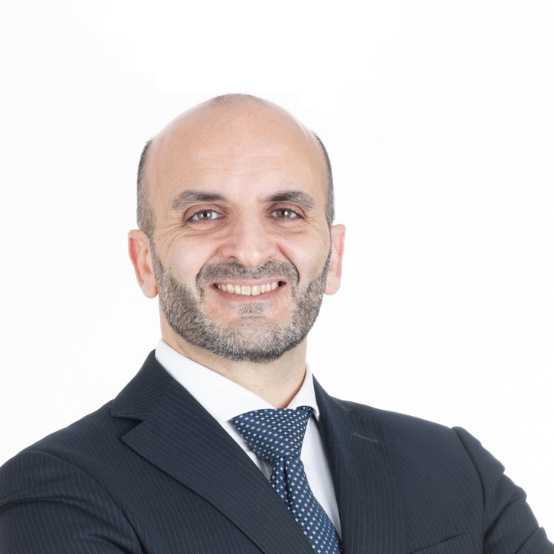
Giorgio Centurelli

Head of the Technical Secretariat at the Italian Ministry of Environment and Energy Security (MASE)

Senior Expert in Recovery and Resilience Facility (RRF) and cohesion policy, over 20 years of experience on EU Structural Funds acquired working for Italian public authorities and for Managing Authorities and Audit Authorities of some Italian Operational Programmes and related to different programming periods (since 2000-2006) with responsibilities and coordination roles. As an author of numerous articles and essays, lecturer in the field of development policy concerning the management and control systems of the National Recovery and Resilience Plan and cohesion Programmes and the sector of capacity building, digital transformation for Public Administrations and environment.

Francesco Loiero

Head of the NRRP Financial Management Office at the Ministry of Environment and Energy Security, Italy

Francesco Loiero is a Public Executive and qualified Chartered Accountant specializing in the management of the NRRP and EU Structural Funds. An expert in financial management, EU controls, and Simplified Cost Options, he possesses deep knowledge of regulations from 2007 to 2027. He is also a prolific lecturer, having delivered over 120 courses for prestigious national and European institutions such as Sapienza University and the European Institute of Public Administration (EIPA).

Do you have more questions?

Contact us

Your contact person

Contact form

Vienna, Austria

This course will take place in the elegant and historic city of Vienna, offering a rich cultural setting and inspiring urban backdrop for an immersive learning experience.

Training Fee Inclusions

In addition to comprehensive training materials, the seminar fee covers the following:

a) Full Seminar Access
• Full programme access — admission to all seminar sessions, expert presentations, case‑based discussions, and practical exercises forming the core of the training programme.
b) Training Materials
• Training materials package — professionally prepared printed and digital materials supporting the learning process and enabling continued study after the seminar.
c) Catering Services
• Daily catering services — daily provision of  coffee breaks and one lunch, ensuring participant comfort and creating opportunities for informal networking.
d) Experiential Learning Session: Guided Tour & Culinary Exploration
• Guided cultural tour — a professionally guided tour offering insights into the cultural and historical context of the region, designed to complement seminar discussions through direct exposure to local heritage.
• Culinary exploration — a structured food‑street tasting experience curated to highlight the diversity of local culinary practices and their socio‑economic significance, fostering intercultural understanding and dialogue among participants.
e) Participant Recognition
• Group photo and souvenirs — a group family photo and selected souvenirs provided to actively engaged participants as a token of appreciation and a memorable keepsake of the seminar.
f) Certificate of Attendance
• Certificate of Attendance — issued to participants who complete the full seminar programme, formally recognising their participation and learning achievement.

Your contact person

ENROLL

If you’d like support with your booking, feel free to email us – we’ll take care of everything.
Alternatively, you can fill out the form below.

Please note: In some government institutions, security settings may block the form. If the form does not work, don’t hesitate to email us directly.

Participant

Mandatory fields are marked with *.

Invoice Organisation

Participants:
Total: € (excl. VAT)