Evaluation of Cohesion Policy Post‑2027: Measuring Impact and Effectiveness

Overview

Lost in the bewildering jungle of evaluation methods? Bombarded with technical terms such as process tracing, contribution analysis, propensity score matching, difference-in-difference, realist evaluation, outcome harvesting, sensemaker, customer journeys… ?

Overwhelmed by evaluators that claim to have the magical best method to deal with any evaluation question? Looking for a systematic way to determine what you should ask from an evaluator and how to find out if they can deliver? Then this is the seminar for you!

You will be able to push through any evaluation jargon by understanding that there is no endless range of methods, but a much more limited family of approaches within which there are variants. In this way, you will make sure that you stay in charge of any evaluator rather than the other way around.

The seminar will not get overly technical but will deliver just the right level of knowledge to ensure you can make better decisions as to the right evaluation design that will deliver answer to the questions that matter.

Expected outcomes

  • I understand the EU requirements in terms of evaluation
  • I understand the difference between evaluation, monitoring and audit
  • I understand how to create an evaluation plan
  • I understand how to create Terms of Reference for an evaluation.
  • I understand when I should involve stakeholders in the evaluation processes
  • I understand how I should describe the scope of an evaluation
  • I understand the difference between a change model and an action model in the context of a Theory of Change
  • I understand the difference between merit, enlightenment and development approaches to evaluation
  • I understand what are the preferred evaluation research strategies given a selected evaluation approach
  • I understand the use and limitations of surveys
  • I understand the differences between the various counterfactual impact evaluation approaches (RCT, PSM, RDD, Dif-Dif) and when I can (not) use the various counterfactual impact evaluation approaches
  • I understand how purpose, criteria, questions and maturity stage of an intervention are connected to each other
  • I understand the diversity of pragmatic evaluation strategies and the various questions they can answer
  • I understand the basics of the various case study strategies (congruence analysis, process tracing, QCA) and what different types of questions they can answer
  • I understand the logic of a counterfactual and its ideal requirements

Who this seminar is for

  • EU funds programme management officials (eg. managing authority / intermediate body) commissioning evaluations
  • Evaluators (researchers, consultants)
  • Auditors engaged in performance audits
  • Beneficiaries involved in large projects that are required to perform evaluations
  • Policy experts involved with evaluations

Day 1

09.30 – Welcome of the Participants, Introduction Round, Introductions
10.00 – Part I: WHAT is evaluation, WHY it is useful and WHO plays a role in evaluation process?
• What is evaluation and what is its purpose;
• Evaluation process;
• Evaluation stakeholders;
• Evaluation in EU funds management
• Difference between monitoring and evaluation
11:00 – Coffee Break – Networking
11.15 – Part II: WHAT shall we evaluate?
• What do we evaluate: what is the relevant scope of the evaluation?
• How to think about “interventions” via theories of change and action
12:30 – Lunch Break
13:30 – Workshop: reviewing a terms of reference for scope
14.00 – Part III: WHY shall we evaluate?
• Purpose of the evaluation;
• Evaluation criteria;
• Relation of purpose and criteria to the stages of an intervention
15:00 – Coffee Break – Networking
15:15 – Part III: WHY shall we evaluate? (cont.)
• Evaluation questions;
• Relation of evaluation questions to criteria
16.00 – Workshop: reviewing a terms of reference for the relation of criteria, questions and purpose
16.30 – Conclusions and End of Day 1

Day 2

09.30 – Wrap-up of Day 1
10.00 – Part IV: HOW shall we evaluate?
• Three overall evaluation approaches: merit, enlightenment, development;
• Theory testing versus pragmatic evaluation strategies: which research strategies to
choose (selection framework);
• The role of an evaluability assessment
11:15 – Coffee Break – Networking
11.30 – Workshop – analysis of a terms of reference for the required evaluation approach
11.45 – Part IV: HOW shall we evaluate? (cont.)
• Pragmatic approaches (incl. Most Significant Change, Concept Mapping, Outcome
harvesting…)
13:00 – Lunch Break
14:00 – Part IV: HOW shall we evaluate? (cont.)
Theory testing
• Surveys
• RCT’s
15:15 – Coffee Break – Networking
15.30 – Quasi-experiments incl. Propensity score matching, Regression discontinuity, Difference
in Difference
16.30 – Conclusions and End of Day 2

Day 3

09.30 – Wrap-up of Day 2
9.45 – Part IV: HOW shall we evaluate? (cont.)
• Theory testing case study approaches
o Process tracing
o Using AI to help formulate mechanisms
11.30 – Coffee Break – Networking
11.45 – Part IV: HOW shall we evaluate? (cont.)
• Theory testing case study approaches:
o Congruence analysis
• Relation of case study research to contribution analysis and realist evaluation
12:30 – Lunch Break
13.30 – Part IV: HOW shall we evaluate? (cont.)
• Theory testing case study approaches:
o QCA case study approach
14.15 – Workshop: analysis of a terms of reference for research strategy
14.45 – Coffee Break – Networking
15:00 – Part V: HOW to prepare evaluations?
• Creating your evaluation plan;
• Generating criteria for prioritising evaluations;
• How to deal with the requirement to evaluate all priorities in a programme for impact?
15:30 – Part V: HOW to prepare evaluations? (ctd)
Terms of Reference
• Drafting Terms of reference
• What Evaluation deliverables you should require
16.00 – Conclusions and End of Day 3
Expert

Benedict Wauters is currently the director responsible for European Programmes in the Ministry of Labour in Flanders (Belgium). He has worked for more than twenty years as a civil servant, consultant (Deloitte Consulting in Belgium, Policy Research Corporation in the Netherlands) and independent expert, in/for multilateral public institutions (e.g. United Nations, OECD, European Commission), regional and national government departments (e.g. Dutch ministry of foreign affairs, Dutch ministry of transport, Polish ministry of regional development, the French Region of Nord-Pas-De-Calais and the Belgian Regional Governments of Flanders, Brussels and Wallonie), local government (e.g. City of Antwerp) as well as NGOs and public corporations . He has written several books focused on EU fundings and public sector governance

Benedict Wauters

Director responsible for European Programmes in the Ministry of Labour in Flanders (Belgium)

Do you have more questions?

Contact us

Your contact person

Contact form

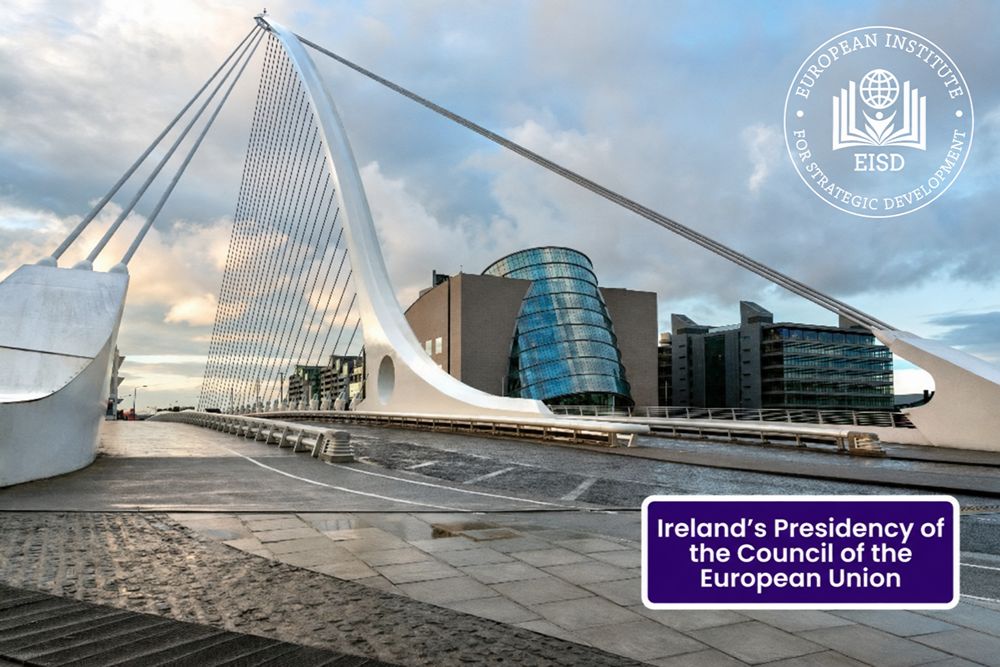
Dublin, Ireland

This course will take place in the vibrant capital of Ireland, a city full of history, culture and lively spirit — the perfect backdrop for an inspiring and engaging learning experience on the Emerald Isle.

Training Fee Inclusions

In addition to comprehensive training materials, the seminar fee covers the following:

a) Full Seminar Access
• Full programme access — admission to all seminar sessions, expert presentations, case‑based discussions, and practical exercises forming the core of the training programme.
b) Training Materials
• Training materials package — professionally prepared printed and digital materials supporting the learning process and enabling continued study after the seminar.
c) Catering Services
• Daily catering services — daily provision of  coffee breaks and one lunch, ensuring participant comfort and creating opportunities for informal networking.
d) Experiential Learning Session: Guided Tour & Culinary Exploration
• Guided cultural tour — a professionally guided tour offering insights into the cultural and historical context of the region, designed to complement seminar discussions through direct exposure to local heritage.
• Culinary exploration — a structured food‑street tasting experience curated to highlight the diversity of local culinary practices and their socio‑economic significance, fostering intercultural understanding and dialogue among participants.
e) Participant Recognition
• Group photo and souvenirs — a group family photo and selected souvenirs provided to actively engaged participants as a token of appreciation and a memorable keepsake of the seminar.
f) Certificate of Attendance
• Certificate of Attendance — issued to participants who complete the full seminar programme, formally recognising their participation and learning achievement.

ENROLL

Enrollment for this course is now closed, but you can explore our available courses.