EU FUNDS 2021-2027 and Future : Effective Monitoring , Evaluation and SMART Indicators for Result-Oriented Programme Management.

Overview

The responsibility of Authorities (e.g. Managing Authorities, Intermediate Bodies,…) that manage European funds is not only to set up high quality project appraisal systems in order to select the most promising interventions in terms of policy relevant results. Once selected, these Authorities need to play a role in ensuring that these interventions deliver the intended results. That includes helping the continuously improve while also finding out to what extent and/or how these interventions actually (can) make a difference. Hence the need for effective monitoring and evaluation systems. The seminar will therefore provide in depth perspectives on why, what and how to measure, with ample attention for the specific role of impact evaluation.

What will you learn

  • What is a result: the key difference between outputs and outcomes
  • How to meet EC requirements for monitoring and evaluation
  • The difference between monitoring, evaluation and audit from a control perspective
  • The various uses of performance information
  • How to create programme specific indicators
  • The pitfalls of management by targets
  • The impact of “VUCA” (volatile, uncertain, complex, ambiguous) on performance management approaches
  • The (mis)use of results based financing
  • The limitations of traditional monitoring for continuous improvement
  • The role of different types of evaluation
  • The various methodologies to assess impact of interventions: counterfactuals versus theory based
  • Data requirements for the various evaluation methods

The conference will take place at Roma Luxus Hotel, Largo Angelicum 4, 00184 Rome, Italy.

Day 1: 

9:00-9:45

  • Welcome and introduction

9:30-11:00 WHY do we measure? Control!

  • Three uses of performance information
  • Internal control
  • Strategic control systems: diagnostic, boundary, interactive, belief
  • The difference between monitoring, evaluation and audit and their relation to control

11:00-11:15 Break

11:15-12:00 Group work on control systems

12:00-13:00 WHAT to measure?

  • Common indicators
  • Programme specific indicators

13.00-14.00 Lunch

14:00-14:30 Group work on reviewing programme specific indicators

14:30-15:00 WHAT to measure?  ctd

  • From intervention logic to theory of change

15:00-15:30  HOW to measure?

  • SMART as a tool

15.30-15.45 Break

15:45-16:30  HOW to measure? ctd

  • Soft outcomes
    • different kinds of measures for different purposes: facts, behaviors, attitudes
    • typology of soft measures: Likert scale, Guttman scale, Thurstone Scale, Semantic Differential,…
    • self-anchored measures
  • Dis/advantages of different soft measures
  • Using existing measurement instruments

Day 2

9:30-10:00 Group work on programme specific indicators

10:00:-11:00 How to collect the data?

  • Using registry data
  • Sampling – informed estimates

11.00-11.15 Break

11.15-12:00   Performance management (?)

  • Approaches to target setting for the different parts of the intervention logic

12:00-12:30 Group work on adjusting targets

12:30-13.30 Lunch

13:30-14:30   Performance management (?) ctd

  • Back to the three uses of performance information
  • Pitfalls of managing with targets
  • Results based finance

14:30-15:00   Group work

  • Assessing the ‘”VUCA” level of your operations

15:15-16:30   Performance management (?) ctd

  • Sophisticated performance management in more complex operations
  • LEAN and continuous improvement

Day 3

9:30-10:15

  • Evaluation versus montoring
  • What can evaluations do that monitoring cannot?
  • Typology of evaluations
  • EC requirements for evaluation plans

10:15-11:15: The universe of impact evaluation

  • Common designs that cannot tell you anything about impact
  • Scientific approaches to impact evaluation:
    • Counterfactual evaluation using quasi-experimental designs
    • Theory based evaluation using (multiple) case study designs
  • From RCT’s to propensity scores

11:15-11:30 Break

11:30-12:30: Counterfactuals continued

  • Difference in difference
  • Regression discontinuity

12:30-13:30 Lunch

13:30-15.00 Theory based approaches

  • What does “explaining the outcome “ mean?
  • Mechanisms as theory
  • Case studies and case selection
  • Process tracing

15:00-15:15  Break

15:15-16:15 Theory based approaches continued

  • Congruence analysis
  • Generalising across cases

16:15-16:30 Conclusions

Expert

Benedict Wauters is currently the director responsible for European Programmes in the Ministry of Labour in Flanders (Belgium). He has worked for more than twenty years as a civil servant, consultant (Deloitte Consulting in Belgium, Policy Research Corporation in the Netherlands) and independent expert, in/for multilateral public institutions (e.g. United Nations, OECD, European Commission), regional and national government departments (e.g. Dutch ministry of foreign affairs, Dutch ministry of transport, Polish ministry of regional development, the French Region of Nord-Pas-De-Calais and the Belgian Regional Governments of Flanders, Brussels and Wallonie), local government (e.g. City of Antwerp) as well as NGOs and public corporations . He has written several books focused on EU fundings and public sector governance

Benedict Wauters

Director responsible for European Programmes in the Ministry of Labour in Flanders (Belgium)

Do you have more questions?

Contact us

Your contact person

Contact form

Rome, Italy

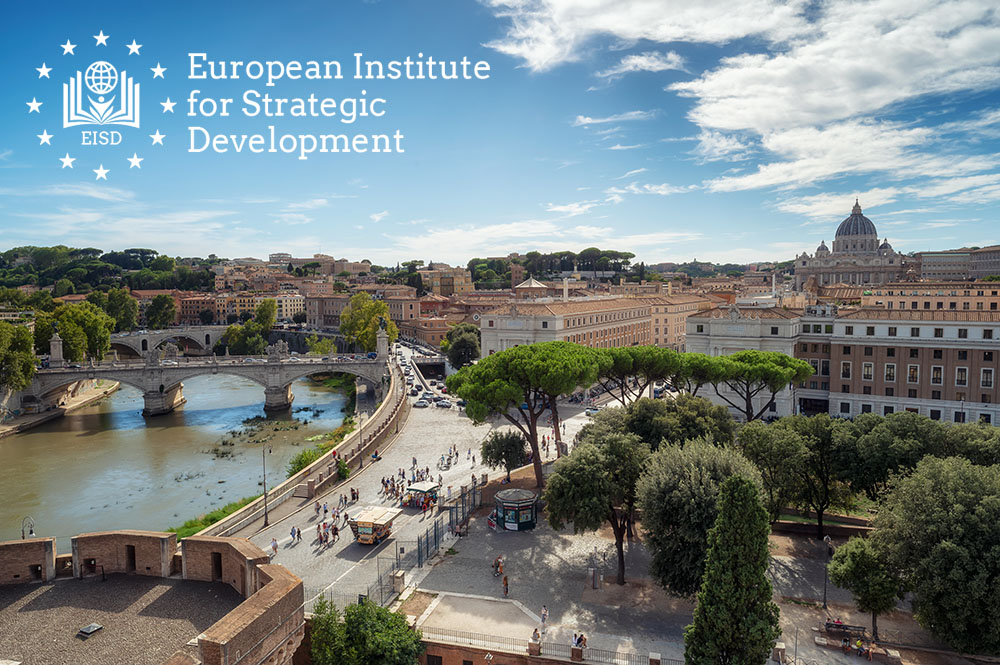
This course will take place in the historic city of Rome, Italy, offering a unique blend of ancient heritage, lively atmosphere, and inspiring surroundings for an unforgettable learning experience.

Your contact person

ENROLL

If you’d like support with your booking, feel free to email us – we’ll take care of everything.
Alternatively, you can fill out the form below.

Please note: In some government institutions, security settings may block the form. If the form does not work, don’t hesitate to email us directly.

Participant

Mandatory fields are marked with *.

Invoice Organisation

Participants:
Total: € (excl. VAT)

🎅 St. Nicholas Day Offer: Book 3, Pay for 2!

This holiday season, secure 3 spots for any 2025 seminar and get one completely FREE – our gift to you!

📅 Offer ends December 6, 2024.

Don’t miss this chance to save and grow with us!